






















What You May Not Know About Opioids
Fast Relief
You’re in pain — a lot of pain — so your doctor prescribes an opioid. Common opioids include:
- Codeine.
- Morphine.
- Oxycodone (OxyContin and Roxicodone).
- Hydrocodone.
- Tramadol.
- Methadone.
- Hydromorphone.
- Tapentadol.
- Anileridine.
- Levorphanol.
- Buprenorphine.
- Fentanyl.
You take your medicine. You soon feel much better. That’s a good thing … for now.
The Opioid Effect
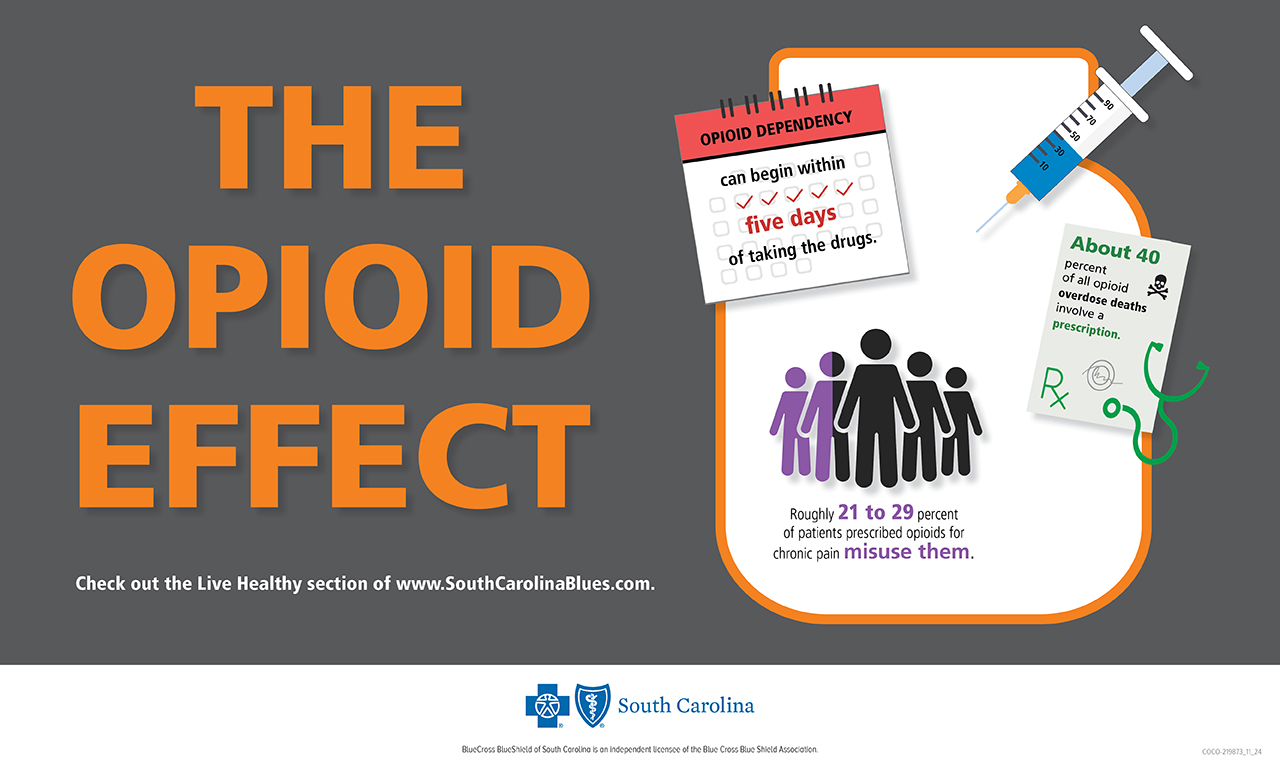
Opioids can relieve pain, but they’re also highly addictive. The Mayo Clinic says opioid dependency can begin within five days of taking the drugs. Opiates change how the brain perceives pain. They produce feelings of pleasure. Their impact on the brain’s reward system is what leads to addiction. They also slow key body functions such as heart rate and breathing. Over time, the body gets used to opioids, and they stop working as well. To get the same relief, you need to take more and more.
Long-term use increases your risk of addiction, overdose and death. The risk of overdose with opioids is high. This is because the amount that can cause an overdose is not much higher than the amount used to treat pain. The Centers for Disease Control and Prevention says 76 percent of all drug overdose deaths involve an opioid. The Mayo Clinic has found that 40 percent of all opioid overdose deaths involve a prescription.
Change the Trend
The good news is that opioid-related deaths have begun to decline. This is largely because doctors now prescribe far fewer of them to treat chronic pain. Even so, 125 million opioid prescriptions were given to U.S. patients in 2023.
Chronic pain is a common reason people are prescribed an opioid. But there are other options for people seeking relief. Pain management programs such as cognitive behavioral therapy, acupuncture, medical massage and physical therapy have proven to be effective alternatives to opioids.
Speak With Your Doctor
Even if you’re taking them for pain relief, opioid use can quickly turn into addiction. That’s a road you don’t want to travel. Talk with your doctor about other ways to manage your pain.
Opioid use may cause side effects such as:
- Nausea.
- Vomiting.
- Itching.
- Constipation.
- Problems breathing.
- Problems urinating.
- Mental disturbance and confusion.
If your doctor says opioids are needed, know how to protect yourself. You can:
- Take the lowest dose.
- Know the side effects and risks.
- Use only as directed.
And remember, never take medicine from a friend or family member that was not prescribed for you. Likewise, never share your medicine. Be sure to dispose of all medicines you no longer need.
The Mayo Clinic and the Centers for Disease Control and Prevention are independent organizations that provide health information you may find helpful.