






















Prevention Is Power: See the Risks. Change the Future of Your Health.
Preventive care is often about what doesn’t happen.
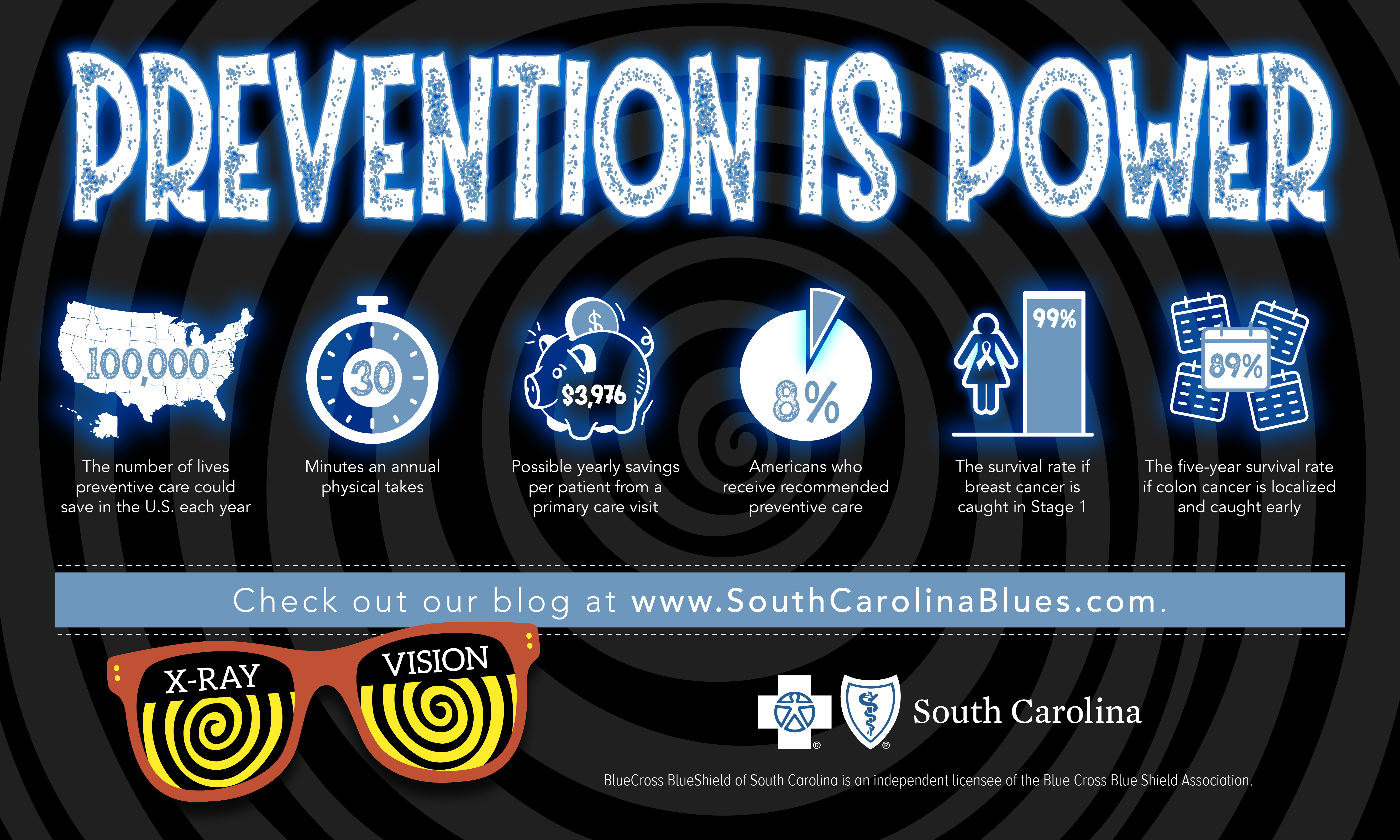
You may never see what health problems you escaped by staying on track with your yearly physicals, screenings and vaccines. For this reason, it’s easy to ignore the value of preventive care.
But the facts are clear. Preventive care can:
- Find health issues early.
- Stop you from getting sick.
- Lower your risk of chronic disease.
- Promote health and wellness.
- Save you money.
Knowing the facts about preventive care gives you the power to see into your future … and change it for the better.
Keep reading to learn more.
Primary Care Physician
Your primary care physician (PCP) is your first point of contact for most common health problems.
He or she is also your main partner when it comes to preventive care. PCPs can conduct yearly physicals, provide screenings and give you vaccines.
Yearly Physicals
You should schedule a physical with your PCP at least once a year. It only takes around 30 minutes to complete. Your PCP may:
Check your vital signs.
- Make sure you’re in good health.
- Review your medical history.
- Adjust your treatment plan.
- Answer questions.
A yearly physical will allow your PCP to track your health over time. He or she can tailor a long-term health plan based on your changing needs.
Body Mass Index
During your checkup, your PCP may measure your body mass index (BMI). Your BMI uses the ratio of your height to your weight to estimate your body fat.
BMI alone can’t diagnose body fat or health. But it can help your PCP quickly assess your status and risks.
There are many easy-to-use BMI calculators online, such as this example from the CDC.
A BMI from 18.5 to 24.9 is healthy:
- If your BMI is below 18.5, you are likely underweight.
- If your BMI is 25 or over, you are likely overweight.
- If your BMI is over 30, you are likely obese.
Preventive Screenings
Your PCP may also conduct or advise you to schedule screenings. Screenings can catch many health problems early, when they are easier to treat. They can detect issues such as:
- Diabetes.
- Heart disease.
- Breast cancer.
- Cervical cancer.
- Colon cancer.
- Prostate cancer.
- Skin cancer.
The screenings you need may vary based on your age, gender and risk factors. Talk with your PCP about which ones are right for you.
Vaccines
Vaccines can stop you from getting sick. If you do get sick, vaccines can decrease the harshness and length of your illness. Common vaccines can protect you from:
- The flu.
- COVID-19.
- RSV, or respiratory syncytial virus.
- HPV.
- Tetanus, diphtheria and pertussis.
- Shingles.
Your PCP can tell you which vaccines are right for you.
Don’t forget: Prevention is power. Schedule a checkup with your PCP today.
The Centers for Disease Control and Prevention and the Mayo Clinic are independent organizations that offer health information you may find helpful.